These one-of-a-kind quilt pants were handcrafted from an authentic mid-century American scrap quilt, originally pieced between the late 1940s and early 1950s.
The quilt features a classic Pinwheel pattern, formed from hand-cut half-square triangles arranged in a lively, spinning grid. The fabrics tell a post-war story: feedsack florals, ginghams, shirtings, and dress cottons in soft blues, reds, yellows, and creams—materials once saved, reused, and stitched with care.
Originally made for warmth and utility, this quilt has been thoughtfully reimagined into a modern silhouette while preserving its history. Subtle irregularities in the piecing and stitching are not flaws, but evidence of handwork and age—each mark a reminder that this textile lived a full life before becoming wearable art.
No two panels match exactly. No two pieces will ever be the same.
Details:
Made from an original vintage quilt (c. 1945–1955)
Traditional Pinwheel / Windmill quilt pattern
Hand-pieced scrap cottons, feedsack and garment fabrics
Elastic waist with relaxed, easy fit
Fully one-of-a-kind
This piece is part of Quinnie John’s commitment to honoring historic textiles—preserving the labor, ingenuity, and quiet beauty of American quiltmaking through thoughtful, modern forms.
Details:
Made from an original vintage quilt (c. 1945–1955)
Traditional Pinwheel / Windmill quilt pattern
Hand-pieced scrap cottons, feedsack and garment fabrics
Elastic waist with relaxed, easy fit
Fully one-of-a-kind
This piece is part of Quinnie John’s commitment to honoring historic textiles—preserving the labor, ingenuity, and quiet beauty of American quiltmaking through thoughtful, modern forms.
See pricing rationale at bottom of page.
These one-of-a-kind quilt pants were handcrafted from an authentic mid-century American scrap quilt, originally pieced between the late 1940s and early 1950s.
The quilt features a classic Pinwheel pattern, formed from hand-cut half-square triangles arranged in a lively, spinning grid. The fabrics tell a post-war story: feedsack florals, ginghams, shirtings, and dress cottons in soft blues, reds, yellows, and creams—materials once saved, reused, and stitched with care.
Originally made for warmth and utility, this quilt has been thoughtfully reimagined into a modern silhouette while preserving its history. Subtle irregularities in the piecing and stitching are not flaws, but evidence of handwork and age—each mark a reminder that this textile lived a full life before becoming wearable art.
No two panels match exactly. No two pieces will ever be the same.
Details:
Made from an original vintage quilt (c. 1945–1955)
Traditional Pinwheel / Windmill quilt pattern
Hand-pieced scrap cottons, feedsack and garment fabrics
Elastic waist with relaxed, easy fit
Fully one-of-a-kind
This piece is part of Quinnie John’s commitment to honoring historic textiles—preserving the labor, ingenuity, and quiet beauty of American quiltmaking through thoughtful, modern forms.
Details:
Made from an original vintage quilt (c. 1945–1955)
Traditional Pinwheel / Windmill quilt pattern
Hand-pieced scrap cottons, feedsack and garment fabrics
Elastic waist with relaxed, easy fit
Fully one-of-a-kind
This piece is part of Quinnie John’s commitment to honoring historic textiles—preserving the labor, ingenuity, and quiet beauty of American quiltmaking through thoughtful, modern forms.
See pricing rationale at bottom of page.
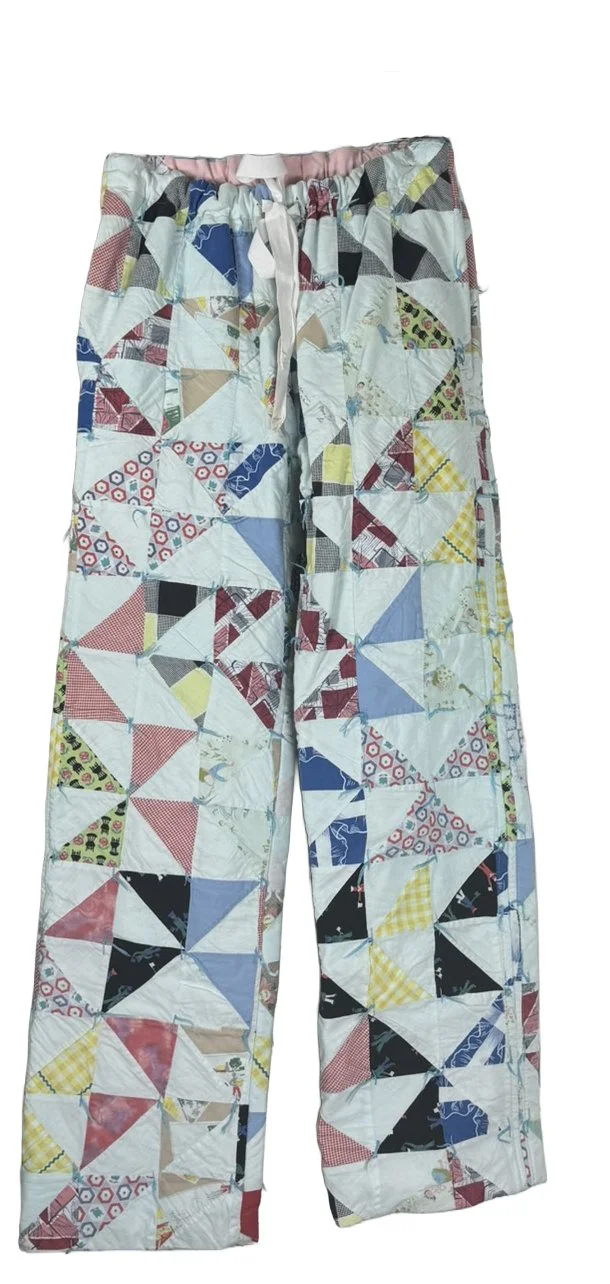 Image 1 of 2
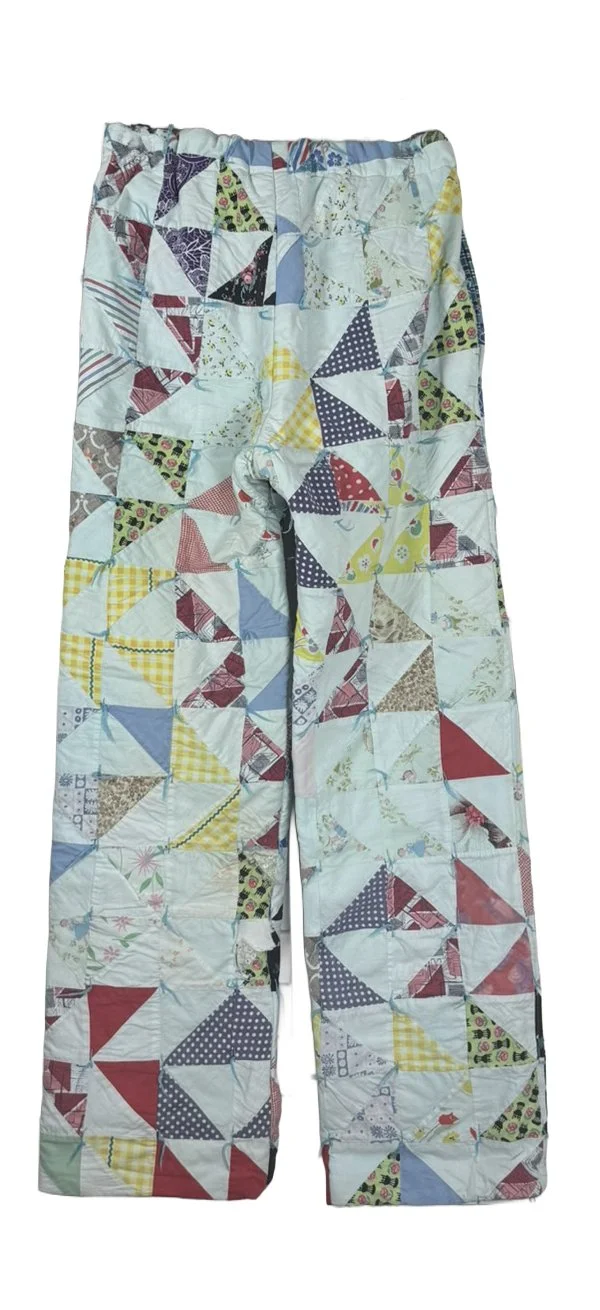 Image 2 of 2