1930s Grandmother’s Flower Garden Quilt Jacket
This one-of-a-kind jacket was crafted from an authentic Grandmother’s Flower Garden quilt, hand-pieced in the mid-1930s to early 1940s using traditional English paper-piecing techniques.
The quilt is composed of hundreds of small hexagons arranged into soft floral rosettes—an iconic pattern of the Depression era. Its palette of powder blues, blush pinks, butter yellows, lavender, and soft neutrals reflects the distinctive pastel dyes and dress cottons of the time. Each fabric was carefully saved, cut, and stitched by hand, a testament to patience, skill, and resourcefulness.
Originally made as a bed quilt, this historic textile has been thoughtfully reworked into a modern jacket silhouette while preserving the integrity of the original handwork. Gentle variations in color, piecing, and stitching are visible throughout and are celebrated as evidence of age and craftsmanship.
No two flowers are alike. This piece exists only once.
Details:
Made from an original vintage quilt (c. 1935–1940)
Traditional Grandmother’s Flower Garden pattern
Hand-pieced hexagon construction
Early feedsack and dress cottons
One-of-a-kind garment
This jacket is part of Quinnie John’s commitment to honoring historic American quilts—preserving the stories, labor, and beauty of early quiltmakers through thoughtful, wearable forms.
See pricing rationale at bottom of page.
1930s Grandmother’s Flower Garden Quilt Jacket
This one-of-a-kind jacket was crafted from an authentic Grandmother’s Flower Garden quilt, hand-pieced in the mid-1930s to early 1940s using traditional English paper-piecing techniques.
The quilt is composed of hundreds of small hexagons arranged into soft floral rosettes—an iconic pattern of the Depression era. Its palette of powder blues, blush pinks, butter yellows, lavender, and soft neutrals reflects the distinctive pastel dyes and dress cottons of the time. Each fabric was carefully saved, cut, and stitched by hand, a testament to patience, skill, and resourcefulness.
Originally made as a bed quilt, this historic textile has been thoughtfully reworked into a modern jacket silhouette while preserving the integrity of the original handwork. Gentle variations in color, piecing, and stitching are visible throughout and are celebrated as evidence of age and craftsmanship.
No two flowers are alike. This piece exists only once.
Details:
Made from an original vintage quilt (c. 1935–1940)
Traditional Grandmother’s Flower Garden pattern
Hand-pieced hexagon construction
Early feedsack and dress cottons
One-of-a-kind garment
This jacket is part of Quinnie John’s commitment to honoring historic American quilts—preserving the stories, labor, and beauty of early quiltmakers through thoughtful, wearable forms.
See pricing rationale at bottom of page.
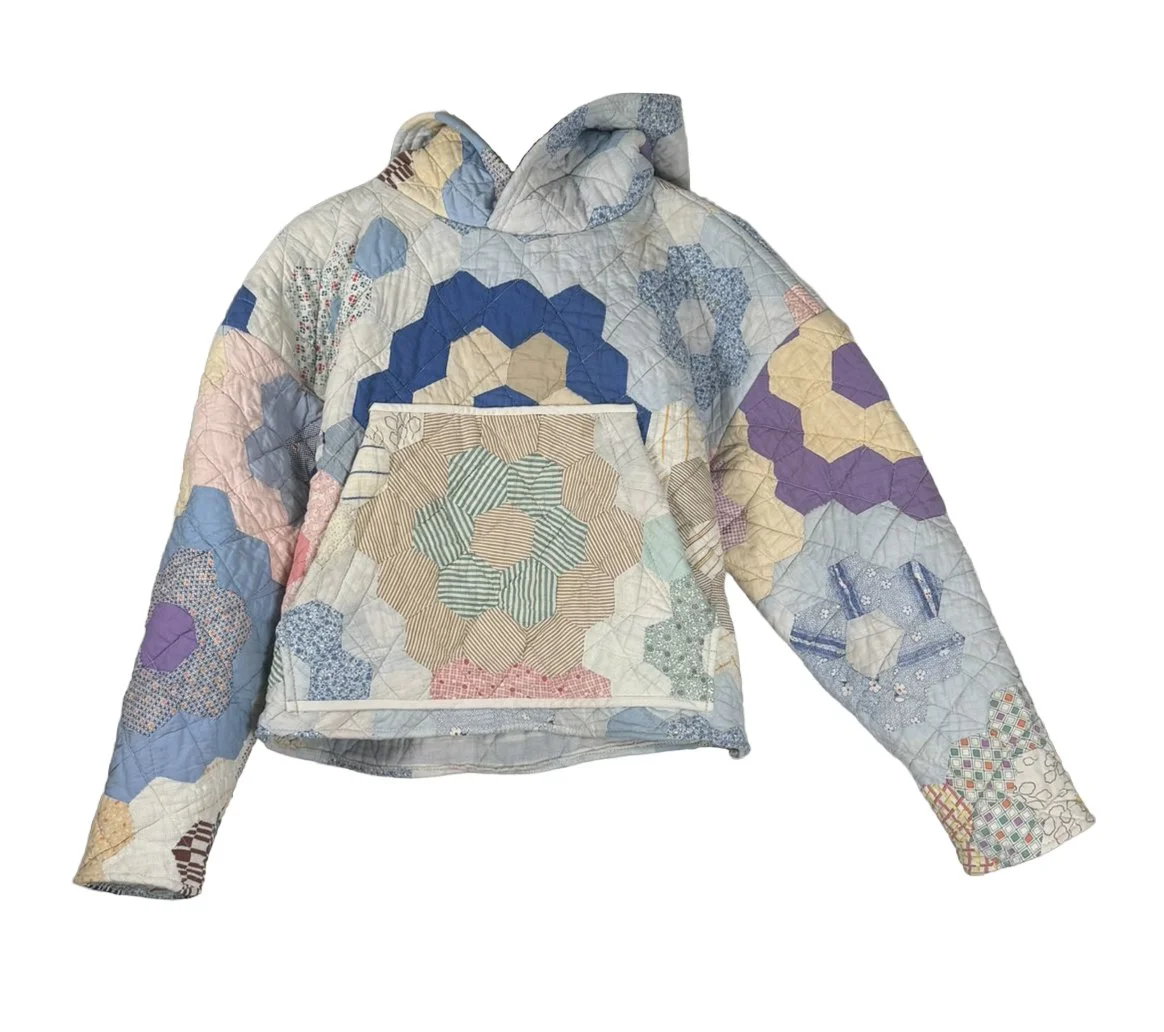 Image 1 of 2
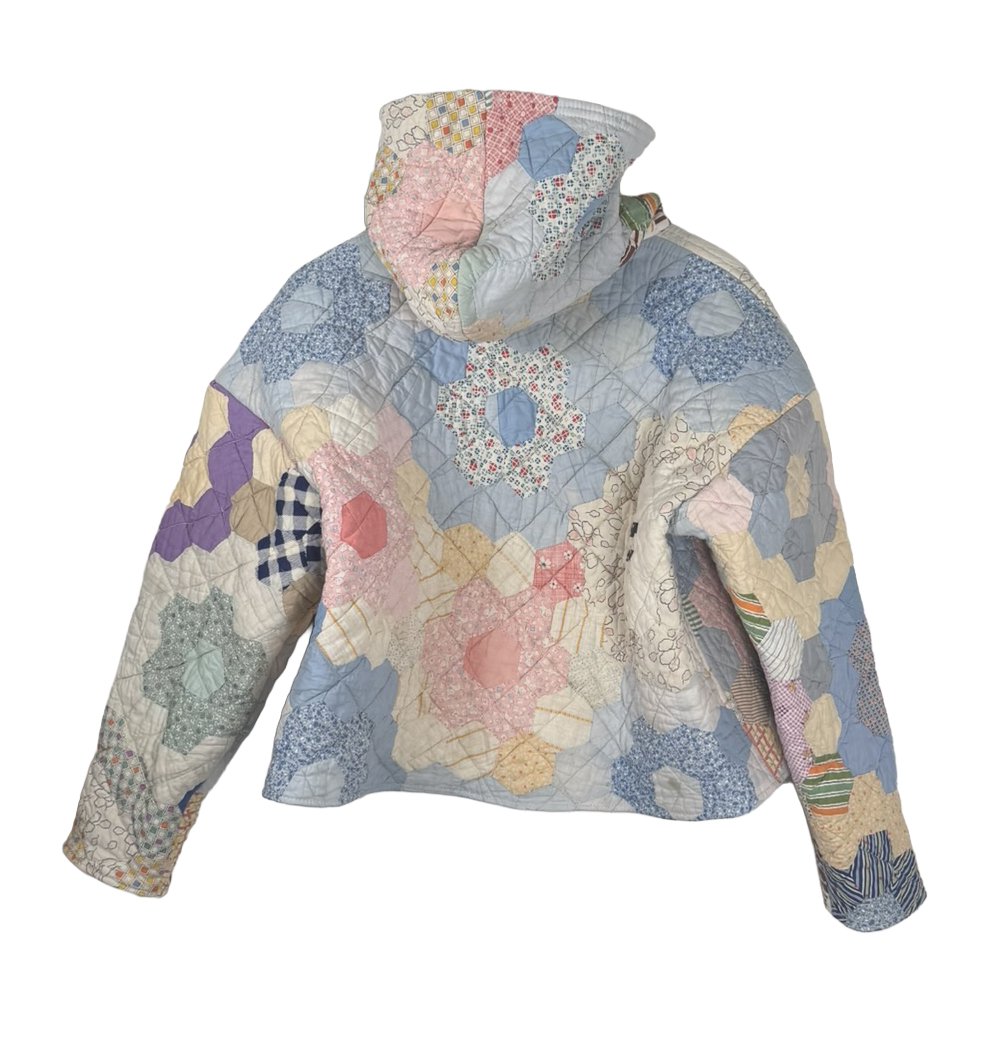 Image 2 of 2